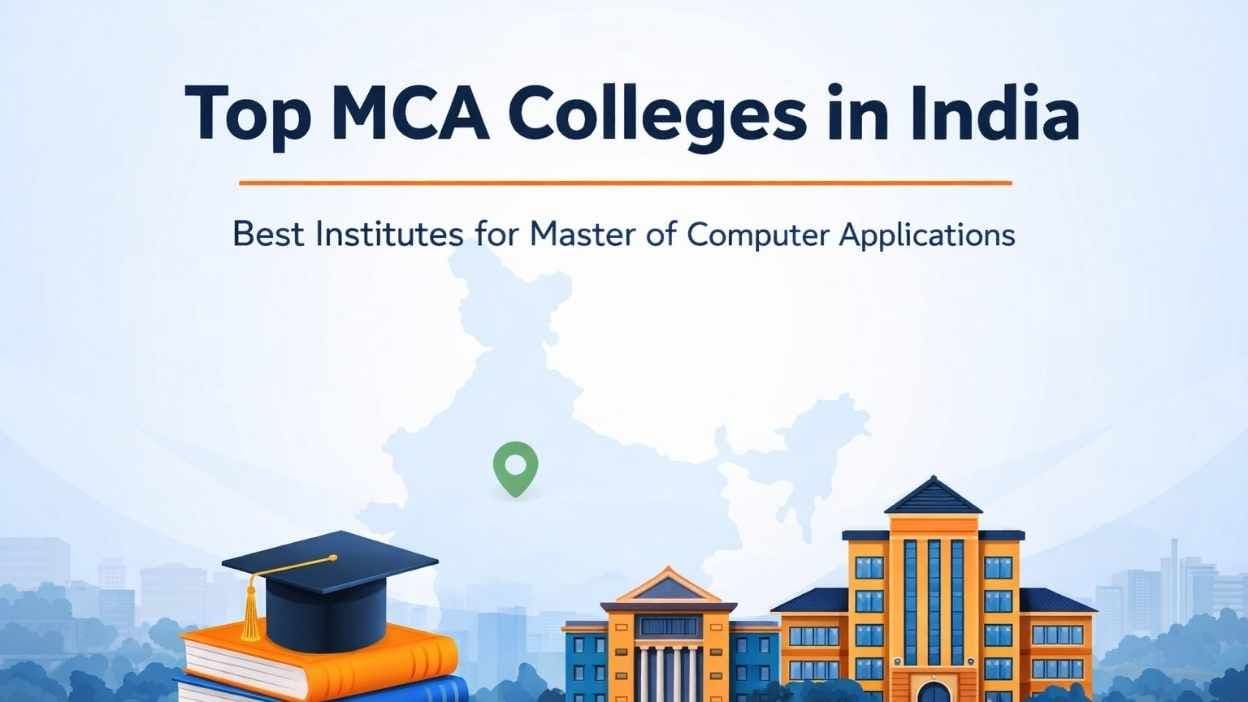
The technological landscape of 2026 represents a definitive maturation of artificial intelligence, moving from speculative generative experiments into a disciplined era of operational reality. In this high-stakes environment, the Master of Computer Applications (MCA) has emerged as the most coveted postgraduate degree for those looking to lead India’s digital future. With the Indian IT sector projected to employ over 10 million professionals by 2026 and a massive shortage of roughly one million cybersecurity experts, the "race for a seat" in a premier institution has never been more intense.
As organizations shift from monolithic models to orchestrated systems using autonomous agents, the role of an MCA graduate has evolved from a "coder" to a "digital orchestrator." This report breaks down the top MCA colleges in India for 2026, examining why everyone from fresh graduates to working professionals—is rushing to secure admission.
1. The ROI Kings: Top Government MCA Colleges
In 2026, the primary reason for the intense competition for government seats is the unparalleled Return on Investment (ROI). While private institutions offer modern infrastructure, top government colleges like the National Institutes of Technology (NITs) and Central Universities provide elite-level placements for a fraction of the cost.
The NIT Network and NIMCET 2026
The NITs remain the "Gold Standard" for MCA education in India. Admission to the top 11 NITs (including Trichy, Warangal, and Surathkal) is strictly through the NIMCET 2026 entrance exam, typically held in June.
- NIT Warangal: Known for record-breaking placements, with highest packages reaching ₹88.5 LPA in recent cycles and average packages around ₹30 LPA.
- NIT Trichy: Consistently ranked among the top technical institutions in India, offering an average placement of ₹10–15 LPA with top recruiters like Amazon, Microsoft, and Oracle.
- NIT Surathkal: A major hub for tech recruitment, reporting average packages of ₹21 LPA.
High-Value Central Universities
For students prioritizing low tuition fees without compromising prestige, three institutions dominate the 2026 conversation:
Jawaharlal Nehru University (JNU), New Delhi: Renowned for its research-oriented approach and incredible affordability, with total course fees as low as ₹432 and average salaries around ₹8 LPA.
Banaras Hindu University (BHU): Offers one of the best fee-to-salary ratios in the country, with average packages climbing to ₹11.1 LPA for a course that costs approximately ₹30,000.
University of Hyderabad: A top choice for those interested in theoretical depth and practical AI applications, accepting both NIMCET and CUET PG scores.
2. The Innovation Hubs: Best Private MCA Colleges
While government colleges lead in ROI, private institutions in 2026 are winning the "talent race" by offering industry-aligned curriculums, smart classrooms, and global recruiter access. These colleges are preferred by students who want specialized tracks in AI, Cloud Computing, and Cybersecurity.
Why Private Colleges Are Winning in AI
Private colleges have been faster to integrate "Early Fusion" multi-modal AI architectures into their labs, allowing students to work on systems that process text, images, and audio simultaneously achieving 40% higher accuracy on complex tasks. Institutions like Sharda University and Galgotias University have also established "AI Gigafactories" in collaboration with tech giants to ensure students are "agent-ready" by graduation.
3. The 2026 Curriculum: From Coding to Agentic Orchestration
Everyone wants a seat in 2026 because the MCA curriculum has undergone its most significant update in a decade. The industry no longer values manual log collection or basic web development; it demands experts in Cognitive Orchestration.
Core Focus Areas in 2026:
Agentic AI & Machine Learning: Training students to design autonomous agents that can plan, use tools, and operate in loops without constant human oversight.
Cloud-Native Security: With over 60% of Indian businesses moving to the cloud, MCA graduates are being trained as Cloud Architects who can manage multi-cloud deployments.
Zero Trust Architecture: This has become the default security model in 2026, requiring expertise in continuous authentication and micro-segmentation.
Green AI: To combat the energy crisis of data centers (projected to consume 1,050 TWh by late 2026), top colleges now teach "Energy-to-Solution" metrics and knowledge distillation.
4. The Regulatory Catalyst: The DPDP Act Impact
The full operational enforcement of India’s Digital Personal Data Protection (DPDP) Act on August 2, 2026, has created a "Compliance Gold Rush." Companies now face penalties of up to ₹250 crore for data violations, making "Privacy by Design" a non-negotiable skill.
- MCA graduates from top colleges are being hired at record salaries to fill roles as:
- Data Protection Officers (DPOs): Managing legal and technical compliance for significant data fiduciaries.
- Cybersecurity Consultants: Auditing systems for bias and transparency as required by the new regulations.
- AppSec Engineers: Ensuring that development pipelines (DevSecOps) are secure from code to deployment.
5. The Rise of the Online and Hybrid MCA seat
In 2026, everyone is talking about Online MCA programs because they have achieved total parity with on-campus degrees. UGC-approved online degrees are now accepted for government and PSU roles, allowing working professionals to upskill without leaving their jobs.
Key Benefits of Online MCA in 2026:
- AI-Driven Personalization: Learning platforms use AI to create custom study plans based on the student’s pace.
- Virtual Labs: Students can practice in high-end simulations and cloud-based practice environments from anywhere.
- Industry Mentorship: Direct access to experts from companies like Amazon, Microsoft, and Google through virtual classrooms.
6. Placement Trends: Where the Money is in 2026
The competition for seats is driven by a massive pay gap between generalist graduates and specialized MCA professionals. By 2026, the tech industry has pivoted from "hiring for degrees" to "hiring for validated skills."
- Entry-Level Salaries: Freshers from top-tier colleges typically start between ₹8 LPA and ₹12 LPA, while those in specialized AI or Cloud roles command much more.
- Senior Growth: Professionals with 5–10 years of experience in AI, Cloud, or Cybersecurity are seeing salaries range between ₹20 LPA and ₹40 LPA, with "Principal Architects" in Bengaluru earning up to ₹92 LPA.
- The "Authenticity Premium": As 90% of online content becomes AI-generated, there is a massive surge in demand for humans who can provide "Authenticity Proof" and manage the "Digital Chain of Custody" for information.
Conclusion: Strategic Advice for 2026 Aspirants
The year 2026 represents a turning point where the competitive advantage has shifted from "discovery" to "deployment." The organizations that will win are those with the strongest data foundations and the most robust orchestration layers.
If you are aiming for a seat in a top MCA college in 2026, your strategy should be:
- Prioritize Specialization: General IT is fading. Focus on AI Security, Data Science, or Cloud Architecture.
- Master the Entrance Gateway: For NITs, start preparing for NIMCET 12 months in advance. For Central Universities, master the CUET PG syllabus.
- Build a Practical Portfolio: Hands-on experience in virtual labs and real-world projects is now more valuable than theory alone.
The MCA is no longer just a degree; it is the entry permit into the silicon-based workforce of the future. Whether you choose the high ROI of an NIT or the cutting-edge labs of a top private university, securing a seat today is the best way to future-proof your career in the era of Artificial Intelligence.
Frequently Asked Questions (FAQs)
1. Which college offers the highest placement for MCA in 2026?
NIT Warangal has reported packages up to ₹88.5 LPA. Among private colleges, LPU and VIT have recorded international packages exceeding ₹1 crore for specialized tech roles.
2. Is NIMCET 2026 the only way to get into an NIT?
Yes, NIMCET is the mandatory national-level gateway for MCA admissions to 11 NITs and 2 IIITs. The exam typically tests Mathematics, Logic, and Computer Awareness.
3. Why is JNU considered a top value college for MCA?
JNU offers elite-level faculty and strong placements (avg. ₹8 LPA) for an incredibly low total fee of roughly ₹432, providing the highest ROI in India.
4. Can I get a job in AI immediately after an MCA in 2026?
Yes. Modern MCA programs offer specialized tracks in Agentic AI and ML. Demand for these roles is growing at 15–22% annually, making graduates highly employable.
5. How has the DPDP Act changed MCA job opportunities?
The Act has created a surge in demand for Data Protection Officers and compliance experts. MCA graduates who understand privacy-first architecture can earn between ₹15–35 LPA.
6. Are Online MCA degrees valid for government jobs in 2026?
Yes, as per UGC guidelines, approved online degrees are treated on par with regular degrees for all employment, including PSU and government roles.
7. What is the average fee for a private MCA college in 2026?
Fees for top private colleges generally range from ₹2 lakhs to ₹8 lakhs. While higher than government colleges, they often offer superior infrastructure and specialized labs.