SIH 2026: Registration, Themes and Winning Tips | Underrated Coder
SIH 2026: Registration, Themes and Winning Tips
52 min read
Share:
Every year, thousands of students register for the Smart India Hackathon with big ambitions, and every year, most of them get eliminated before their idea ever reaches the national portal. Not because their idea was bad, but because nobody told them how the process actually works beyond the basic eligibility checklist. This guide covers everything you actually need — how registration works, what the 2026 themes look like, and the preparation details that separate teams who reach the Grand Finale from teams who don't.
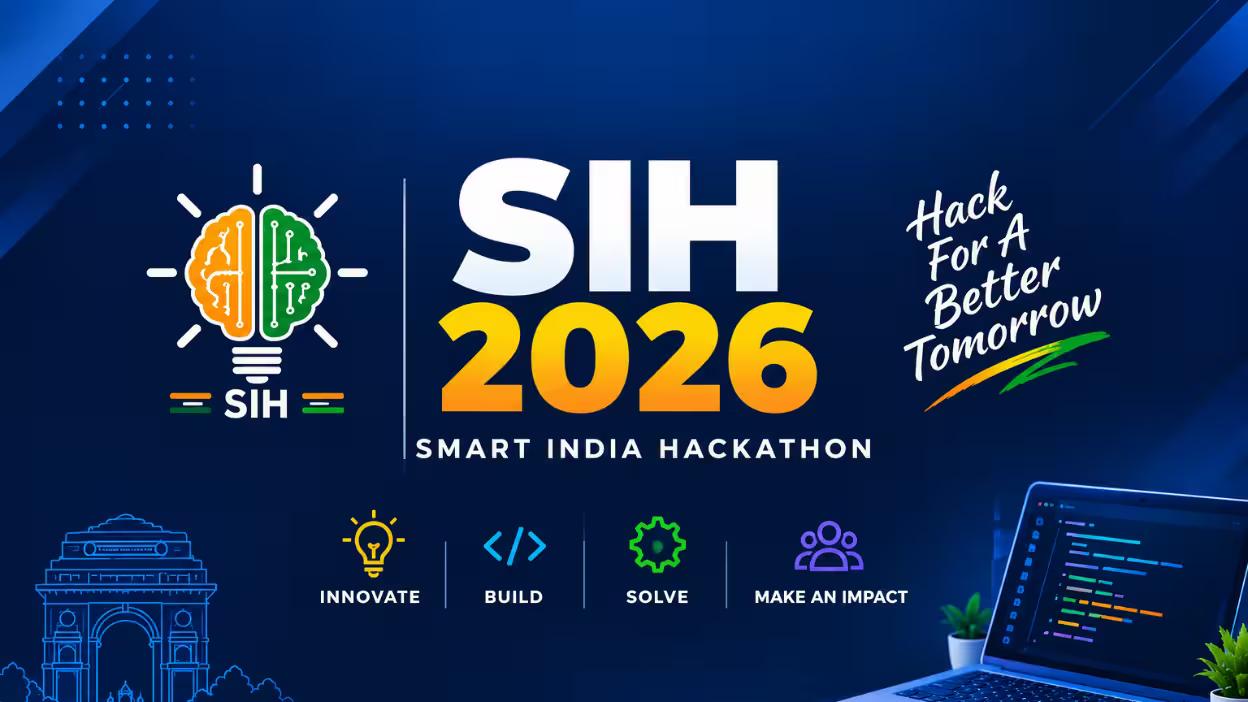
SIH 2026 is India's largest national-level hackathon, organized by the Ministry of Education's Innovation Cell and AICTE, where 6-member student teams solve real problem statements from government ministries and industry across sectors like healthcare, agriculture, education, and sustainability. Registration happens through your college's SPOC on the official SIH portal, and teams must first clear an internal college-level hackathon before being nominated for the national round. The path to the Grand Finale runs through your own campus long before it reaches Delhi.
What Exactly Is SIH 2026
The Smart India Hackathon is organized by the Ministry of Education's Innovation Cell (MIC) in partnership with AICTE, and it brings together student teams from across the country to solve real problem statements submitted by government departments, public sector undertakings, and industry partners (Reskilll). This year's edition was officially launched on August 21, 2026. Unlike a college project or a case study competition, these are genuine problems that ministries and organizations actually want solved, which is part of why the competition carries so much weight on a resume.
Eligibility and Team Rules
Before you start thinking about problem statements, get the basic team structure right, because this is where a surprising number of teams get disqualified early.
Your team needs exactly 6 student members, and all of them must belong to the same institution — you can't mix students from different colleges into one team. At least one team member must be female; this isn't a suggestion, it's a mandatory requirement. Members can come from different departments within your college, which is actually an advantage — a team that mixes computer science, electronics, and management students often builds more well-rounded solutions than one made up entirely of coders.
You're also allowed to bring in 1-2 faculty or industry mentors for guidance. A good mentor who has some familiarity with the problem statement's domain can save you weeks of going in the wrong direction, so don't treat this as optional just because you're confident in your idea.
How Registration Actually Works
This is the part most students get confused about, because SIH doesn't let individual students register directly on the national portal. Everything flows through your college's SPOC — the Single Point of Contact.
If you're not sure whether your college has a SPOC registered, that's your first task, not your last. Talk to your HOD or Dean and find out. Without an active SPOC, your college effectively doesn't exist on the SIH system, no matter how good your idea is.
Once your SPOC is active, the actual registration steps look roughly like this:
Form your 6-member team, keeping the gender diversity rule in mind from day one, not as an afterthought
Browse the released problem statements on the official SIH portal (sih.gov.in) and shortlist a few that genuinely interest your team
Register your team details through your SPOC, who submits them to the national system
Prepare for and clear your college's internal hackathon
If nominated, your SPOC uploads your idea presentation and video demonstration for national-level screening
SIH 2026 Themes and Sectors
SIH 2026 released 226 problem statements this year, spread across a wide range of sectors (Reskilll). The major themes include:
Healthcare — problems involving AI-based diagnostics, telemedicine platforms, and patient management systems. This sector tends to attract teams with a strong data science or app development background.
Agriculture and Food — smart farming solutions, crop monitoring tools, and supply chain improvements. If your team has any rural or agricultural context to draw from, this sector rewards genuine domain understanding over flashy tech.
Education and Skill Development — personalized learning tools, assessment systems, and skilling platforms. A crowded category, so a narrow, well-executed idea tends to beat a broad, ambitious one here.
Smart Technologies — IoT applications, automation, and smart city infrastructure. This sector often needs hardware components, so multidisciplinary teams have a real edge.
Sustainability — carbon tracking, renewable energy solutions, and waste management systems. Judges in this category tend to respond well to ideas with a clear, measurable environmental impact rather than vague sustainability claims.
Picking a theme isn't just about what sounds impressive — it's about matching your team's actual skills to a problem you can realistically build a working prototype for in the time you have.
The Internal Hackathon Is Where Most Teams Get Eliminated
Here's something most guides gloss over: the internal hackathon at your own college is the stage that decides most outcomes, not the national round (Where U Elevate). Thousands of teams get filtered out here before the national portal ever sees their idea, and this stage typically runs in September.
Because this round happens at your own institution, the judging can vary significantly in rigor and style from college to college. Some treat it as a formality; others run it almost as seriously as the actual Grand Finale. Either way, treat your internal round with full seriousness — a weak internal presentation is the single most common reason strong ideas never make it further.
PPT and Video Submission
If your team clears the internal round, your SPOC uploads your idea presentation and a video demonstration for national screening. A few things matter more here than students expect:
Your presentation needs to clearly explain the problem, your proposed solution, and — critically — why your approach is different or better than an obvious existing solution. Judges reviewing hundreds of submissions notice generic "we'll use AI to solve this" slides immediately, and not favorably.
Your video demonstration should show an actual working prototype wherever possible, even a rough one. A polished slide deck describing an idea that doesn't exist yet is far less convincing than a rough, clearly-functional demo of something real.
Winning Tips That Actually Matter
Read the problem statement more than once. A surprising number of teams solve a problem adjacent to the one that was actually asked, because they skimmed the statement and ran with their first idea. Read it slowly, and make sure your entire team agrees on what's actually being asked before you start building.
Build a working prototype, not just a presentation. A mockup with static screens looks fine in a slide deck but falls apart the moment a judge asks a follow-up question about how a specific feature actually works. Even a partially functional prototype demonstrates real capability in a way that polished slides never will.
Start preparing before problem statements are officially released. Strong teams often begin sharpening their technical skills and deciding on their domain focus ahead of time, so that once statements drop, they can move straight into building rather than spending the first few days just getting oriented.
Choose a problem that matches your team's actual strengths. An ambitious idea your team can't fully execute loses to a modest idea your team executes well. Be honest about what your six members can realistically build well in the time available.
Rehearse your explanation, not just your code. Being able to clearly explain your solution's real-world impact, your technical approach, and your reasoning matters as much as the build itself — judges are evaluating communication and problem understanding, not just a working demo.
Use mentors early, not as a last resort. Bring your faculty or industry mentor into the conversation while you're still deciding on your approach, not after you've already built half the solution and hit a wall.
Conclusion
SIH 2026 rewards teams that treat the entire process seriously from day one — not just the Grand Finale, but the internal hackathon that decides whether you get there at all. Pick a theme that fits your team's real strengths, read your problem statement carefully, build something that actually works, and start preparing before the pressure sets in. The teams that reach the national stage aren't always the most talented ones they're usually the ones who took every stage of the process seriously.
Frequently Asked Questions
How do I register for SIH 2026?
You don't register individually — your college's SPOC handles registration on the official SIH portal after your team is formed. Make sure your college has an active SPOC, then work with them to submit your team details and problem statement choice.
What is the team size requirement for SIH 2026?
Each team must have exactly 6 student members from the same institution, with at least one female member mandatory. Members can come from different departments, and teams may bring 1-2 faculty or industry mentors.
What are the main themes for SIH 2026?
The 2026 edition covers healthcare, agriculture and food, education and skill development, smart technologies, and sustainability, based on the 226 released problem statements. Each sector includes multiple specific problem statements submitted by different government departments and organizations.
What happens after the internal hackathon?
If your team is nominated by your SPOC after the internal round, you submit an idea presentation and a video demonstration for national-level screening. Teams that clear this stage are invited to the Grand Finale, a 36-hour non-stop hackathon at a nodal center in December.
What's the biggest mistake teams make in SIH?
The most common mistake is misreading the problem statement and building a solution to a slightly different problem than the one actually asked. The second most common mistake is relying on a polished presentation instead of an actual working prototype.