
Resources
Interview Preparation
Community
Help & Support
Master the 2026 mobile app development course roadmap. Learn AI-integration, Flutter, and native coding to secure high-paying tech roles today.

Written by Kartik Rai
Working at Adobe · Founder, Underrated Coder
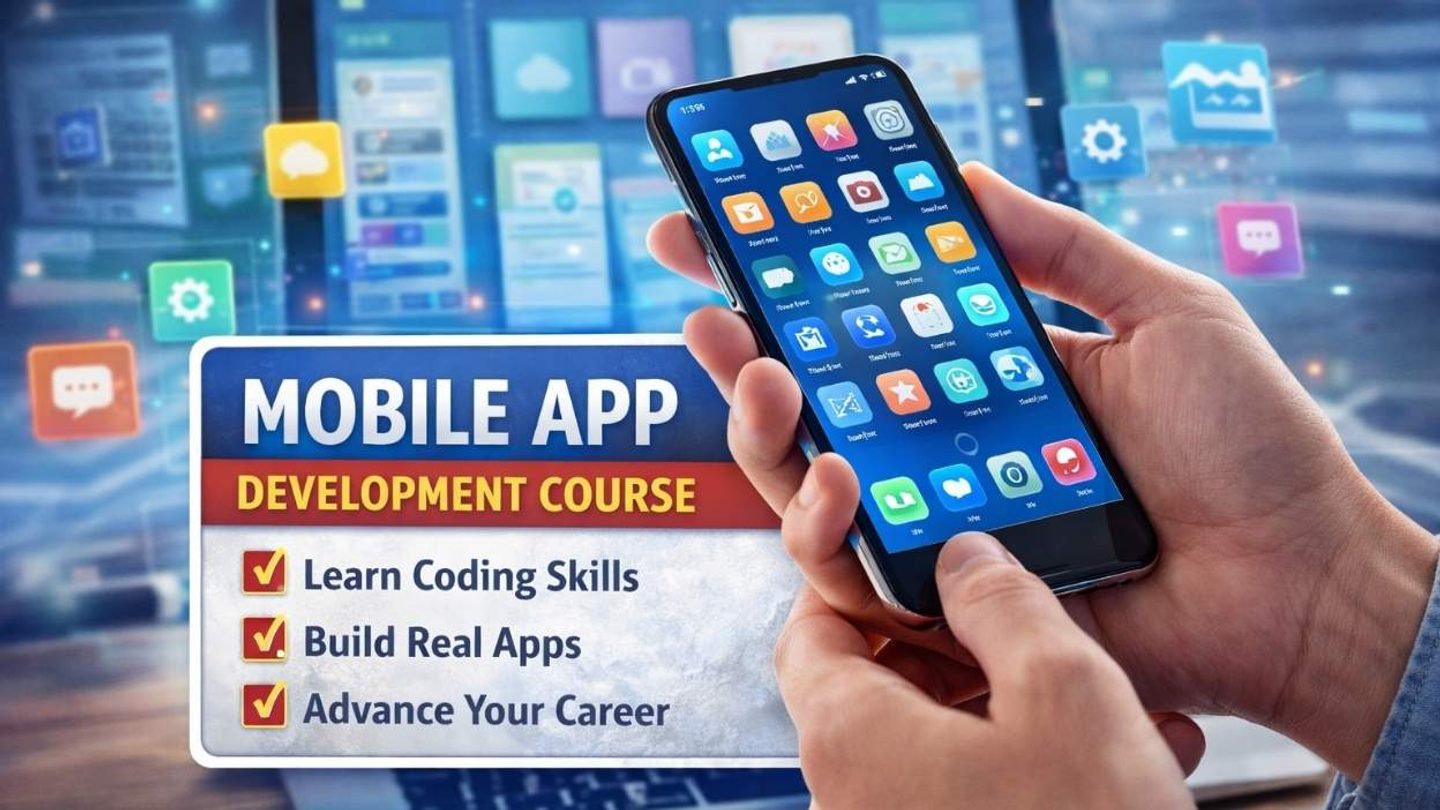
In 2026, the digital world lives in the palm of our hands. From managing smart homes to accessing decentralized finance, mobile applications are the primary interface for human-machine interaction. If you are looking to future-proof your career, enrolling in a mobile app development course is no longer just an option—it is a strategic necessity. The landscape has shifted from simple coding to "AI-augmented building," making it the perfect time for both beginners and experienced developers to reskill.
This guide explores why a is your ticket to the high-paying tech economy of 2026 and what you should look for in a curriculum.
Master the 2026 mobile app development course roadmap. Learn AI-integration, Flutter, and native coding to secure high-paying tech roles today.
Written by Kartik Rai
Working at Adobe · Founder, Underrated Coder
In 2026, the digital world lives in the palm of our hands. From managing smart homes to accessing decentralized finance, mobile applications are the primary interface for human-machine interaction. If you are looking to future-proof your career, enrolling in a mobile app development course is no longer just an option—it is a strategic necessity. The landscape has shifted from simple coding to "AI-augmented building," making it the perfect time for both beginners and experienced developers to reskill.
This guide explores why a is your ticket to the high-paying tech economy of 2026 and what you should look for in a curriculum.
The era of writing every single line of boilerplate code by hand is fading. A modern mobile app development course now focuses on "Vibe Coding"—a collaborative process where developers use AI agents to handle syntax while they focus on architecture, user experience (UX), and complex logic.
Today, a mobile app development course must cover more than just Swift or Kotlin. It must teach you how to integrate Generative AI directly into apps, handle edge computing for 5G devices, and ensure high-level data privacy in an increasingly regulated global market.
When selecting a mobile app development course, your first major decision is the technology stack. In 2026, the industry is divided into two major philosophies:
1. Cross-Platform Mastery (The Efficiency Leader) Most startups and mid-sized companies prefer developers who can build one app that runs on both iOS and Android. A mobile app development course focusing on Flutter (Dart) or React Native (TypeScript) is highly valuable. These frameworks now offer near-native performance, making them the top choice for 80% of new app projects this year.
2. Native Development (The Performance King) For high-end gaming, AR/VR experiences, or apps requiring deep hardware integration, native skills are essential. A mobile app development course in SwiftUI (iOS) or Jetpack Compose (Android) will allow you to squeeze every bit of power out of the latest smartphone processors.
To ensure you aren't learning outdated techniques, verify that your chosen mobile app development course covers these four pillars:
The Return on Investment (ROI) for a mobile app development course remains staggering. In 2026, a junior developer who has completed a certified mobile app development course can expect:
The world is not moving away from apps; it is moving toward smarter apps. By enrolling in a cutting-edge mobile app development course in 2026, you aren't just learning to code—you are learning to build the gateways through which the world experiences the future.
Pair this article with free tools and live classes on the platform:
Compare free AI coding tools for BTech students: Cursor, Copilot, ChatGPT, Gemini, Ollama. Vibe coding tips, prompts, and a weekly routine for placements.
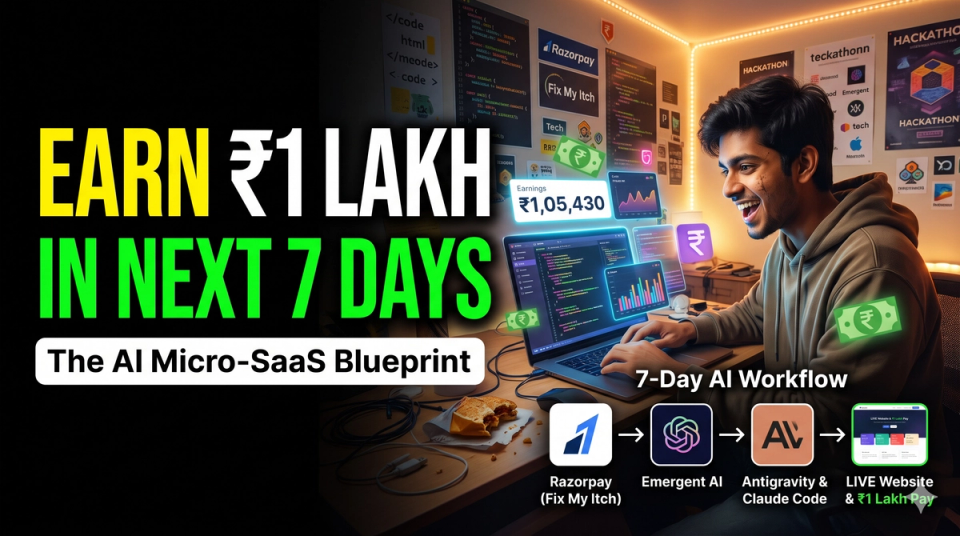
Learn how college students can earn ₹1 Lakh in 7 days by picking a validated problem from Razorpay Fix My Itch, designing architecture in Emergent AI, building with Google Antigravity or Claude Code, and distributing to paying users.
Explore coding notes for Java, Python, JavaScript, C++, and DSA. Learn programming concepts easily with beginner-friendly notes.
Read more on the blog or enroll in a daily live batch for structured placement prep.
The era of writing every single line of boilerplate code by hand is fading. A modern mobile app development course now focuses on "Vibe Coding"—a collaborative process where developers use AI agents to handle syntax while they focus on architecture, user experience (UX), and complex logic.
Today, a mobile app development course must cover more than just Swift or Kotlin. It must teach you how to integrate Generative AI directly into apps, handle edge computing for 5G devices, and ensure high-level data privacy in an increasingly regulated global market.
When selecting a mobile app development course, your first major decision is the technology stack. In 2026, the industry is divided into two major philosophies:
1. Cross-Platform Mastery (The Efficiency Leader) Most startups and mid-sized companies prefer developers who can build one app that runs on both iOS and Android. A mobile app development course focusing on Flutter (Dart) or React Native (TypeScript) is highly valuable. These frameworks now offer near-native performance, making them the top choice for 80% of new app projects this year.
2. Native Development (The Performance King) For high-end gaming, AR/VR experiences, or apps requiring deep hardware integration, native skills are essential. A mobile app development course in SwiftUI (iOS) or Jetpack Compose (Android) will allow you to squeeze every bit of power out of the latest smartphone processors.
To ensure you aren't learning outdated techniques, verify that your chosen mobile app development course covers these four pillars:
The Return on Investment (ROI) for a mobile app development course remains staggering. In 2026, a junior developer who has completed a certified mobile app development course can expect:
The world is not moving away from apps; it is moving toward smarter apps. By enrolling in a cutting-edge mobile app development course in 2026, you aren't just learning to code—you are learning to build the gateways through which the world experiences the future.
Pair this article with free tools and live classes on the platform:
Compare free AI coding tools for BTech students: Cursor, Copilot, ChatGPT, Gemini, Ollama. Vibe coding tips, prompts, and a weekly routine for placements.
Learn how college students can earn ₹1 Lakh in 7 days by picking a validated problem from Razorpay Fix My Itch, designing architecture in Emergent AI, building with Google Antigravity or Claude Code, and distributing to paying users.
Explore coding notes for Java, Python, JavaScript, C++, and DSA. Learn programming concepts easily with beginner-friendly notes.
Read more on the blog or enroll in a daily live batch for structured placement prep.