

Resources
Interview Preparation
Community
Help & Support

Written by Kartik Rai
Working at Adobe · Founder, Underrated Coder

After BCA, MCA can deepen CS fundamentals and unlock roles that filter on postgraduate degrees.
The ROI depends on your background, specialization (AI, cloud, data), and how much you ship before campus drives.
Written by Kartik Rai
Working at Adobe · Founder, Underrated Coder
After BCA, MCA can deepen CS fundamentals and unlock roles that filter on postgraduate degrees.
The ROI depends on your background, specialization (AI, cloud, data), and how much you ship before campus drives.
As the Indian IT sector gears up for a projected valuation of 350 billion by 2030, students standing at the crossroads of their BCA graduation are facing a critical question: Is it better to take a job immediately or invest two more years in a Master of Computer Applications (MCA)?
In 2026, the technical landscape is no longer just about writing basic code. With the integration of Generative AI, Cloud Computing, and Cybersecurity into everyday business operations, the gap between a "coder" and a "software engineer" is widening. This guide provides a data-driven breakdown of whether an MCA is worth your time and money in the current Indian market.
While a BCA degree provides a solid foundation in programming basics, databases, and networking, many graduates find they hit a "career ceiling" early on. In the Indian context, major product-based companies and even mass recruiters like TCS, Infosys, and Accenture often reserve their high-paying "Prime" or "Digital" roles for candidates with a Master’s degree or a B.Tech.
A BCA graduate typically starts in entry-level roles such as:
However, these roles often lack the structural depth required to move into Architecture or Management. The MCA acts as a bridge, transforming a student from a "functional programmer" to a "technical architect."
One of the most compelling reasons to pursue an MCA is the immediate jump in starting salary. Data indicates that MCA graduates often secure starting packages that are 30% to 40% higher than their BCA counterparts.
In 2026, "General MCA" is being replaced by specialized tracks. Choosing the right niche is critical for hitting the upper salary bands.
Is MCA worth it if done from a Tier-3 college? The honest answer from industry veterans on platforms like Reddit is often "No" unless you are exceptionally good at self-learning. To truly see the "worth," students should target top-tier examinations:
If your dream is to work in the USA, Canada, or Germany, an MCA is almost mandatory. Most international immigration and work visa systems follow the 10+2+4 or 10+2+5 education pattern. A 3-year BCA often fails to meet the "4-year degree" requirement for H1-B or similar visas, whereas a BCA+MCA (3+2=5 years) exceeds it.
Furthermore, an MCA allows you to:
Yes, an MCA is worth it in 2026 if:
You might skip MCA if:
The average salary is approximately ₹7.9 LPA. However, graduates from top NITs or those specializing in AI/ML can earn between ₹12 LPA and ₹25 LPA.
It is extremely rare. These companies typically require a B.Tech or MCA degree to meet their academic eligibility criteria for Software Development Engineer (SDE) roles.
It is manageable if you have a strong Mathematics background. Most of the syllabus is based on 11th and 12th-grade math, logic, and basic computer awareness.
Yes, as long as the university is UGC-approved and NAAC-accredited. UGC guidelines state that online degrees are equivalent to regular degrees for jobs and higher studies.
AI, Machine Learning, and Data Science are currently the highest-paying specializations, followed closely by Cybersecurity and Cloud Computing.
A gap before a degree is usually not a problem if you have the skills. However, be prepared to explain the gap during HR interview rounds.
Choose MCA if you want a technical, specialist career (Developer/Architect). Choose an MBA if you want to move into management, operations, or marketing roles.
Pair this article with free tools and live classes on the platform:
Compare free AI coding tools for BTech students: Cursor, Copilot, ChatGPT, Gemini, Ollama. Vibe coding tips, prompts, and a weekly routine for placements.
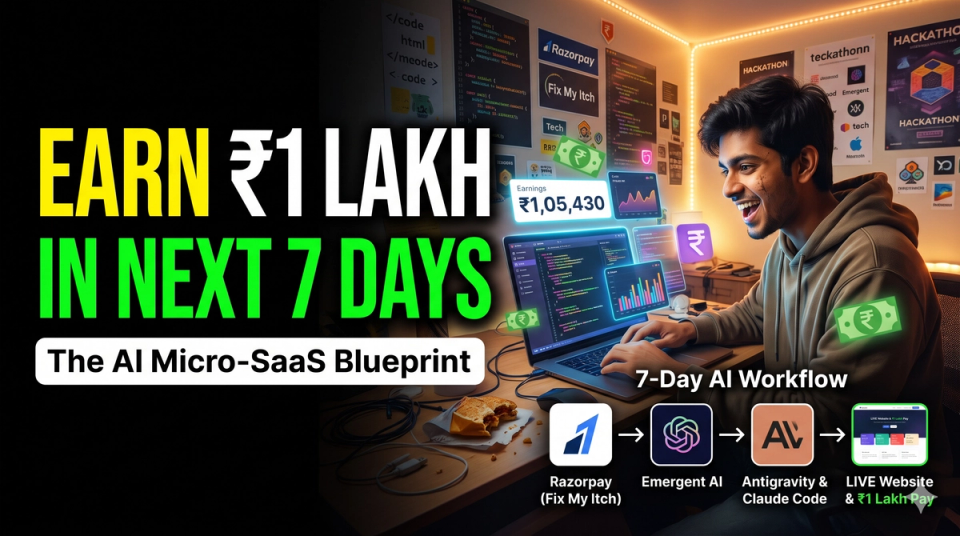
Learn how college students can earn ₹1 Lakh in 7 days by picking a validated problem from Razorpay Fix My Itch, designing architecture in Emergent AI, building with Google Antigravity or Claude Code, and distributing to paying users.
Explore coding notes for Java, Python, JavaScript, C++, and DSA. Learn programming concepts easily with beginner-friendly notes.
Read more on the blog or enroll in a daily live batch for structured placement prep.
As the Indian IT sector gears up for a projected valuation of 350 billion by 2030, students standing at the crossroads of their BCA graduation are facing a critical question: Is it better to take a job immediately or invest two more years in a Master of Computer Applications (MCA)?
In 2026, the technical landscape is no longer just about writing basic code. With the integration of Generative AI, Cloud Computing, and Cybersecurity into everyday business operations, the gap between a "coder" and a "software engineer" is widening. This guide provides a data-driven breakdown of whether an MCA is worth your time and money in the current Indian market.
While a BCA degree provides a solid foundation in programming basics, databases, and networking, many graduates find they hit a "career ceiling" early on. In the Indian context, major product-based companies and even mass recruiters like TCS, Infosys, and Accenture often reserve their high-paying "Prime" or "Digital" roles for candidates with a Master’s degree or a B.Tech.
A BCA graduate typically starts in entry-level roles such as:
However, these roles often lack the structural depth required to move into Architecture or Management. The MCA acts as a bridge, transforming a student from a "functional programmer" to a "technical architect."
One of the most compelling reasons to pursue an MCA is the immediate jump in starting salary. Data indicates that MCA graduates often secure starting packages that are 30% to 40% higher than their BCA counterparts.
In 2026, "General MCA" is being replaced by specialized tracks. Choosing the right niche is critical for hitting the upper salary bands.
Is MCA worth it if done from a Tier-3 college? The honest answer from industry veterans on platforms like Reddit is often "No" unless you are exceptionally good at self-learning. To truly see the "worth," students should target top-tier examinations:
If your dream is to work in the USA, Canada, or Germany, an MCA is almost mandatory. Most international immigration and work visa systems follow the 10+2+4 or 10+2+5 education pattern. A 3-year BCA often fails to meet the "4-year degree" requirement for H1-B or similar visas, whereas a BCA+MCA (3+2=5 years) exceeds it.
Furthermore, an MCA allows you to:
Yes, an MCA is worth it in 2026 if:
You might skip MCA if:
The average salary is approximately ₹7.9 LPA. However, graduates from top NITs or those specializing in AI/ML can earn between ₹12 LPA and ₹25 LPA.
It is extremely rare. These companies typically require a B.Tech or MCA degree to meet their academic eligibility criteria for Software Development Engineer (SDE) roles.
It is manageable if you have a strong Mathematics background. Most of the syllabus is based on 11th and 12th-grade math, logic, and basic computer awareness.
Yes, as long as the university is UGC-approved and NAAC-accredited. UGC guidelines state that online degrees are equivalent to regular degrees for jobs and higher studies.
AI, Machine Learning, and Data Science are currently the highest-paying specializations, followed closely by Cybersecurity and Cloud Computing.
A gap before a degree is usually not a problem if you have the skills. However, be prepared to explain the gap during HR interview rounds.
Choose MCA if you want a technical, specialist career (Developer/Architect). Choose an MBA if you want to move into management, operations, or marketing roles.
Pair this article with free tools and live classes on the platform:
Compare free AI coding tools for BTech students: Cursor, Copilot, ChatGPT, Gemini, Ollama. Vibe coding tips, prompts, and a weekly routine for placements.
Learn how college students can earn ₹1 Lakh in 7 days by picking a validated problem from Razorpay Fix My Itch, designing architecture in Emergent AI, building with Google Antigravity or Claude Code, and distributing to paying users.
Explore coding notes for Java, Python, JavaScript, C++, and DSA. Learn programming concepts easily with beginner-friendly notes.
Read more on the blog or enroll in a daily live batch for structured placement prep.