

Resources
Interview Preparation
Community
Help & Support

Written by Kartik Rai
Working at Adobe · Founder, Underrated Coder
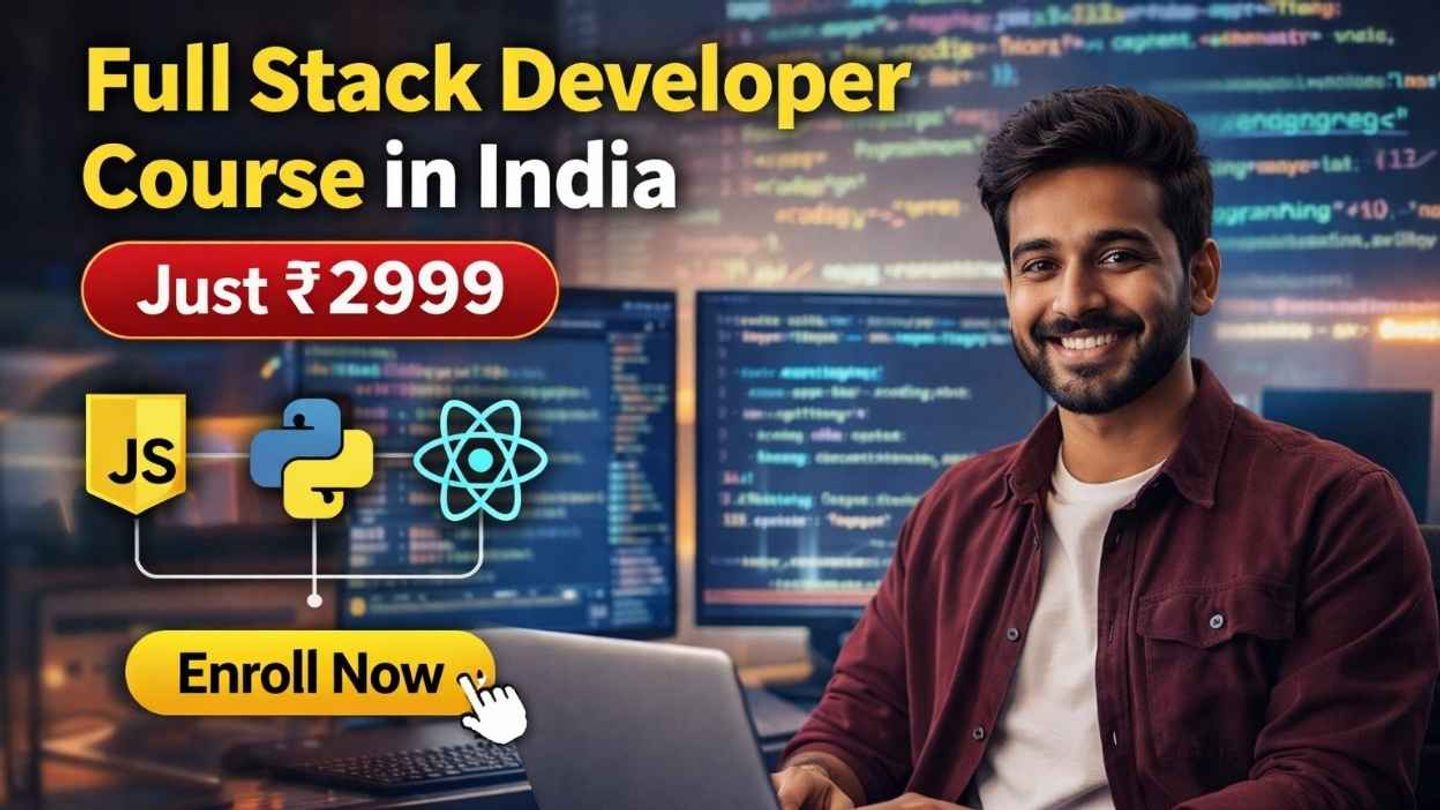
Sub-₹3,000 full stack programs are viable when the provider runs cohorts at scale and you commit to finishing projects.
Prioritize Next.js, auth, databases, and one deployed app over certificate count.
The Indian technological landscape in 2026 is no longer defined by simple web development; it has matured into a disciplined era of and . For anyone looking to enter the IT sector, the choice is clear: you must become a . With India's IT sector projected to employ over 10 million professionals by 2026, the demand for versatile developers who can handle both frontend aesthetics and complex backend logic is at an all-time high.
Written by Kartik Rai
Working at Adobe · Founder, Underrated Coder
Sub-₹3,000 full stack programs are viable when the provider runs cohorts at scale and you commit to finishing projects.
Prioritize Next.js, auth, databases, and one deployed app over certificate count.
The Indian technological landscape in 2026 is no longer defined by simple web development; it has matured into a disciplined era of and . For anyone looking to enter the IT sector, the choice is clear: you must become a . With India's IT sector projected to employ over 10 million professionals by 2026, the demand for versatile developers who can handle both frontend aesthetics and complex backend logic is at an all-time high.
Choosing to buy a full stack developer course in India is a strategic investment in a career that is increasingly "recession-proof." Today, we are offering a comprehensive, industry-aligned Full Stack Development Masterclass for just ₹2999. This guide explores why this is the perfect time to upskill and what you will master in this 2026-ready curriculum.
In the current market, organizations are moving away from hiring "specialized silos" and toward "digital orchestrators." A Full Stack Developer is a professional who understands the complete product lifecycle from what the user sees to how the data is stored and processed behind the scenes.
By 2026, the demand for these roles is growing by approximately 20% annually in India alone. Whether it’s a fintech app in Mumbai or a healthcare platform in Bangalore, every industry needs "guards" for their digital castles who can build, secure, and maintain the entire stack.
The standard "coding course" is obsolete. To be job-ready in 2026, you need a curriculum that reflects the Three-Layer Infrastructure Stack: the Model Layer, the Tool Layer, and the Orchestration Layer. Our ₹2999 course covers the most in-demand technologies used by top product companies like Google, Amazon, and Zomato.
The most significant shift in 2026 is the evolution of AI from an "assistant" to a "partner." Modern developers are no longer just writing code; they are orchestrating AI agents to handle repetitive tasks.
As more code is written by AI agents, the role of the human developer is pivoting to "Liability Management" and "Trust Engineering." You are being trained not just to code, but to oversee the automated world.
One of the main reasons people buy a full stack developer course in India is the exceptional Return on Investment (ROI). The salary gap between a generalist and a technical specialist has widened significantly by 2026.
Top Hiring Hubs in 2026: Bengaluru remains the leader, accounting for 43.5% of tech hiring, followed closely by Hyderabad, Pune, and the Delhi/NCR region. However, with the rise of remote work, Indian developers are increasingly landing global remote roles with US or European firms, earning global-standard salaries while living in India.
In 2026, a developer who doesn't understand security is a liability. The full operational enforcement of India's Digital Personal Data Protection (DPDP) Act on August 2, 2026, has made data privacy a core requirement for every application.
Our course includes a dedicated module on "Privacy by Design," where you will learn:
With so many options available, why choose this program? The answer lies in our "Skills-First" approach. In 2026, 92% of employers prioritize validated competencies over formal degrees.
The year 2026 is a turning point where the competitive advantage has shifted from "discovery" to "deployment." The developers who win are those who can navigate the complexities of AI, cloud architecture, and regulatory compliance while building world-class products.
For just ₹2999, you can gain the skills that are currently begging for talent in the Indian market. Whether you are a student after 12th, a college graduate, or a career switcher, this course is your roadmap to a stable, high-paying, and high-impact career in the era of Artificial Intelligence.
Anyone with a basic interest in technology can join. While a background in BCA, MCA, or B.Tech is helpful, our course starts from the absolute basics, making it accessible to everyone.
With consistent effort of 3–5 hours daily, most students become "agent-ready" and job-ready for entry-level roles within 6 to 9 months, depending on their prior coding exposure.
No. AI acts as a "digital coworker." While it automates repetitive coding tasks, humans are still needed for strategy, complex judgment, and managing the legal liability of automated outcomes.
Freshers in India typically start between ₹4 LPA and ₹8 LPA. However, those specializing in AI-integrated stacks or cloud security can see starting offers reach ₹12 LPA or more.
Yes. Upon successful completion of the course and your capstone projects, you will receive an industry-recognized certification that validates your skills to top recruiters across the country.
Absolutely. We include a specialized module on data protection and Zero-Trust architecture to ensure you can build "privacy-first" applications that comply with India's 2026 legal mandates.
Yes. In 2026, the industry has shifted to "Skills-First" hiring. A strong portfolio of real-world projects is often more valuable to a hiring manager than a traditional degree.
Pair this article with free tools and live classes on the platform:
Compare free AI coding tools for BTech students: Cursor, Copilot, ChatGPT, Gemini, Ollama. Vibe coding tips, prompts, and a weekly routine for placements.
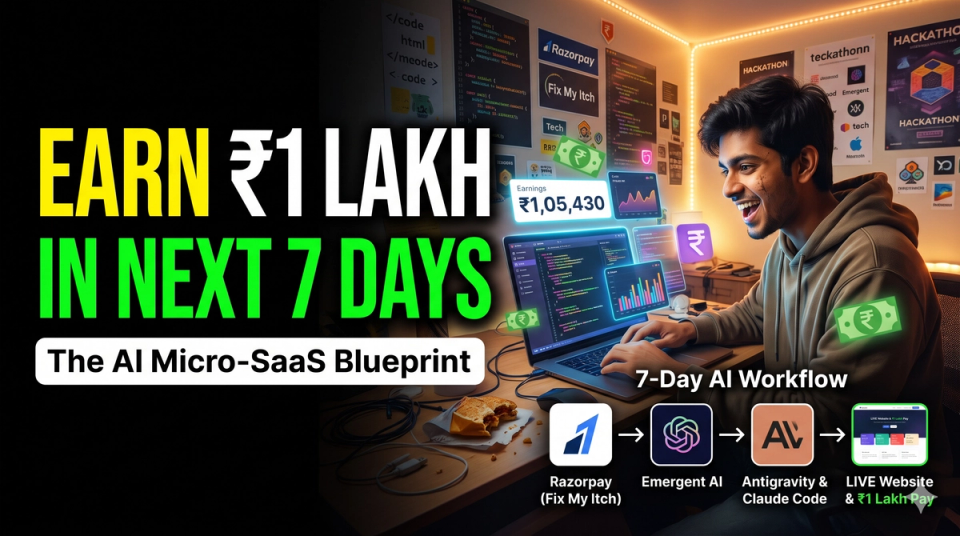
Learn how college students can earn ₹1 Lakh in 7 days by picking a validated problem from Razorpay Fix My Itch, designing architecture in Emergent AI, building with Google Antigravity or Claude Code, and distributing to paying users.
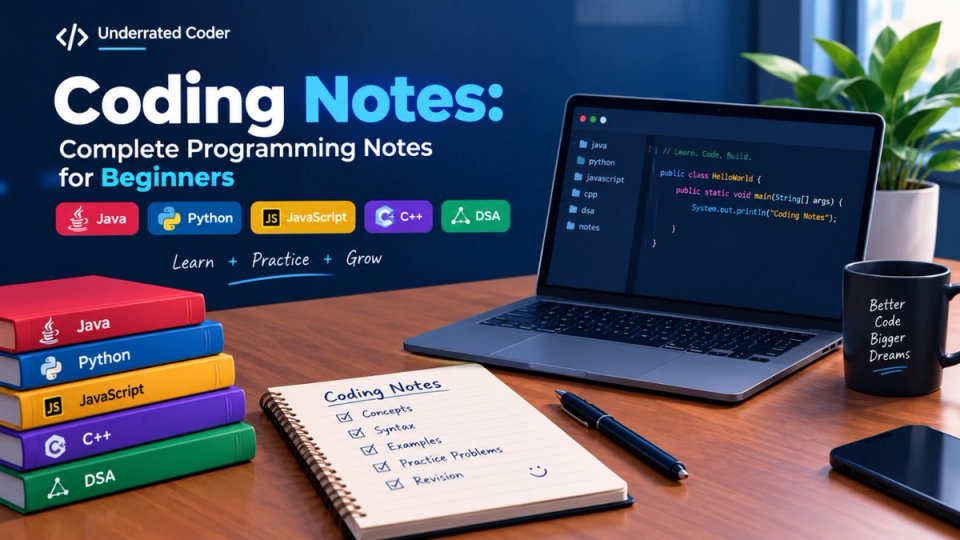
Explore coding notes for Java, Python, JavaScript, C++, and DSA. Learn programming concepts easily with beginner-friendly notes.
Read more on the blog or enroll in a daily live batch for structured placement prep.
Choosing to buy a full stack developer course in India is a strategic investment in a career that is increasingly "recession-proof." Today, we are offering a comprehensive, industry-aligned Full Stack Development Masterclass for just ₹2999. This guide explores why this is the perfect time to upskill and what you will master in this 2026-ready curriculum.
In the current market, organizations are moving away from hiring "specialized silos" and toward "digital orchestrators." A Full Stack Developer is a professional who understands the complete product lifecycle from what the user sees to how the data is stored and processed behind the scenes.
By 2026, the demand for these roles is growing by approximately 20% annually in India alone. Whether it’s a fintech app in Mumbai or a healthcare platform in Bangalore, every industry needs "guards" for their digital castles who can build, secure, and maintain the entire stack.
The standard "coding course" is obsolete. To be job-ready in 2026, you need a curriculum that reflects the Three-Layer Infrastructure Stack: the Model Layer, the Tool Layer, and the Orchestration Layer. Our ₹2999 course covers the most in-demand technologies used by top product companies like Google, Amazon, and Zomato.
The most significant shift in 2026 is the evolution of AI from an "assistant" to a "partner." Modern developers are no longer just writing code; they are orchestrating AI agents to handle repetitive tasks.
As more code is written by AI agents, the role of the human developer is pivoting to "Liability Management" and "Trust Engineering." You are being trained not just to code, but to oversee the automated world.
One of the main reasons people buy a full stack developer course in India is the exceptional Return on Investment (ROI). The salary gap between a generalist and a technical specialist has widened significantly by 2026.
Top Hiring Hubs in 2026: Bengaluru remains the leader, accounting for 43.5% of tech hiring, followed closely by Hyderabad, Pune, and the Delhi/NCR region. However, with the rise of remote work, Indian developers are increasingly landing global remote roles with US or European firms, earning global-standard salaries while living in India.
In 2026, a developer who doesn't understand security is a liability. The full operational enforcement of India's Digital Personal Data Protection (DPDP) Act on August 2, 2026, has made data privacy a core requirement for every application.
Our course includes a dedicated module on "Privacy by Design," where you will learn:
With so many options available, why choose this program? The answer lies in our "Skills-First" approach. In 2026, 92% of employers prioritize validated competencies over formal degrees.
The year 2026 is a turning point where the competitive advantage has shifted from "discovery" to "deployment." The developers who win are those who can navigate the complexities of AI, cloud architecture, and regulatory compliance while building world-class products.
For just ₹2999, you can gain the skills that are currently begging for talent in the Indian market. Whether you are a student after 12th, a college graduate, or a career switcher, this course is your roadmap to a stable, high-paying, and high-impact career in the era of Artificial Intelligence.
Anyone with a basic interest in technology can join. While a background in BCA, MCA, or B.Tech is helpful, our course starts from the absolute basics, making it accessible to everyone.
With consistent effort of 3–5 hours daily, most students become "agent-ready" and job-ready for entry-level roles within 6 to 9 months, depending on their prior coding exposure.
No. AI acts as a "digital coworker." While it automates repetitive coding tasks, humans are still needed for strategy, complex judgment, and managing the legal liability of automated outcomes.
Freshers in India typically start between ₹4 LPA and ₹8 LPA. However, those specializing in AI-integrated stacks or cloud security can see starting offers reach ₹12 LPA or more.
Yes. Upon successful completion of the course and your capstone projects, you will receive an industry-recognized certification that validates your skills to top recruiters across the country.
Absolutely. We include a specialized module on data protection and Zero-Trust architecture to ensure you can build "privacy-first" applications that comply with India's 2026 legal mandates.
Yes. In 2026, the industry has shifted to "Skills-First" hiring. A strong portfolio of real-world projects is often more valuable to a hiring manager than a traditional degree.
Pair this article with free tools and live classes on the platform:
Compare free AI coding tools for BTech students: Cursor, Copilot, ChatGPT, Gemini, Ollama. Vibe coding tips, prompts, and a weekly routine for placements.
Learn how college students can earn ₹1 Lakh in 7 days by picking a validated problem from Razorpay Fix My Itch, designing architecture in Emergent AI, building with Google Antigravity or Claude Code, and distributing to paying users.
Explore coding notes for Java, Python, JavaScript, C++, and DSA. Learn programming concepts easily with beginner-friendly notes.
Read more on the blog or enroll in a daily live batch for structured placement prep.